
 17 jam yang lalu

TEMPO.CO, Jakarta - For years, a worst-case climate scenario served as a stark warning of what could happen if the world failed to curb fossil fuel use. A temperature rise of more than 4 degrees Celsius (7.2 degrees Fahrenheit) by the end of the century would bring with it catastrophic consequences, including deadly heat waves, rising seas, crop failures, and mass displacement.
But a scientific paper published in April says that doomsday pathway — known as RCP8.5 and later SSP5-8.5 — is now less probable. Designed as a benchmark to help governments prepare for dangerous possibilities, the worst-case scenario was not a prediction.
Climate researcher Detlef Van Vuuren, lead author of the new paper, told UK-based climate science platform Carbon Brief that it had always been a "low-probability, high-risk scenario."
It reflected the knowledge and energy trends of the late 2000s, when the world was more reliant on burning planet-heating coal, oil, and gas. But those trends have now changed.
The world is not heading toward the worst-case scenario "because we've actually taken political measures allowing us to move away from that," French climate scientist Christophe Cassou told the AFP news agency.
The new assessment attributes the shift to renewable energy build-out happening faster than expected, with many governments adopting policies that have slowed projected emissions growth.
Friederike Otto, a climate scientist at Imperial College London, said the worst-case scenario had "assumed humanity would continue an unchecked coal-driven fossil fuel boom, which fortunately did not happen."
While acknowledging that as "fundamentally good news," she urged that it "should by no means lead to complacency."
Climate skeptics seize on revised scenario
U.S. President Donald Trump seized on the revision to claim climate scientists had been "wrong," fueling attacks on climate science from skeptics and politicians in both the United States and Europe.
The far-right Alternative for Germany is among them. The AfD used the new narrative to argue for a rollback of the country's climate policies during a parliamentary debate on Wednesday.
Niklas Hohne, executive director and founder of Germany's NewClimate Institute, described that play as "a blatant diversionary tactic by climate deniers and the far right." As the world is in the thick of another energy crisis, he said fossil fuel defenders "will stop at nothing to fabricate a supposed scandal with outrageous arguments and divert attention from the real problems."
Cassou also said scientists "haven't been alarmist at all."
Besides scrapping the worst-case scenario, researchers have also abandoned their most optimistic climate pathway. They warn that the world is now likely to temporarily exceed 1.5 degrees Celsius of warming above pre-industrial levels — the threshold contained in the 2015 Paris Agreement, as a means of avoiding the worst climate impacts.
The message now is clear. As emissions have not fallen fast enough, despite years of warnings and climate pledges, the world could still warm by around 3 degrees Celsius by 2100.
That would sharply intensify climate impacts already visible today, including increasing deadly heat waves, floods, storms and droughts. It would also imply widespread crop failures and sea-level rise affecting as many as 600 million people — all with widespread consequences on food security, economies and human health.
UN climate resolution faces resistance
Meanwhile, the United Nations General Assembly has approved a nonbinding resolution reinforcing countries' obligations to combat climate change.
The UN body voted overwhelmingly in favor of endorsing the advisory opinion issued last year by the International Court of Justice. That ruling said countries could be violating international law if they fail to adequately protect people from dangerous planetary heating.
"The world's highest court has spoken. Today, the General Assembly has answered," UN Secretary-General Antonio Guterres said in a statement. "This is a powerful affirmation of international law, climate justice, science, and the responsibility of states to protect people from the escalating climate crisis."
The US, which withdrew from the Paris Agreement under Trump, as well as petrostates Russia, Iran and Saudi Arabia, opposed the measure.
It is hoped that the resolution, spearheaded by Pacific island nation Vanuatu — which is already facing rising seas and intensifying storms — will strengthen the principle that governments have a legal responsibility to cut greenhouse gas emissions.
The approved text refers to the phaseout of subsidies for fossil fuel exploration, production and exploitation, and calls for damages to be paid by those in violation.
Read: Australia on Alert as Super El Nino Threat Looms in 2026
Click here to get the latest news updates from Tempo on Google News
Australia on Alert as Super El Nino Threat Looms in 2026
30 hari lalu

Said to be strongest in 140 years, a "super" El Nino threat looms over the Pacific, especially in nearby countries like Australia.
Bare-bones Measures to Anticipate Forest Fires
32 hari lalu
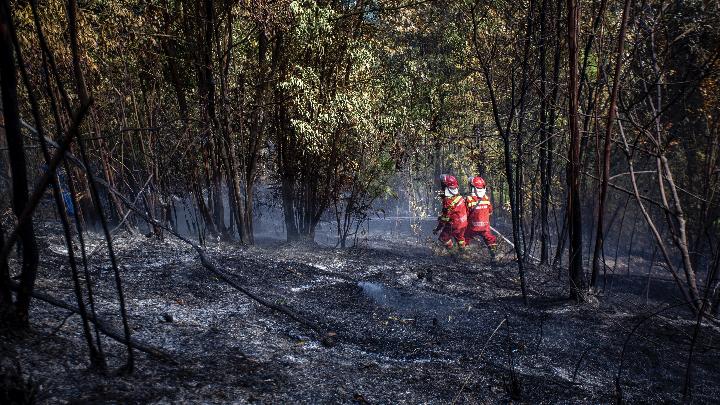
Forest and land fires in several provinces spread as the El Nio climate pattern takes hold.
Half-Hearted Response to Climate Crisis
32 hari lalu

The threat of a climate crisis is looming. The government's response still falls short.
BMKG: No Signs of 'El Nino Godzilla' in 2026
37 hari lalu
Indonesia's BMKG confirms no indication of a 'super El Nino' or 'El Nino Godzilla' occurring in 2026.
El Nino Forecast as Ocean Temperatures Approach Record Highs
41 hari lalu

The EU climate monitor reported the second-highest sea surface temperatures and said current trends point to a likely shift toward El Nino conditions.
Study: Human-Driven Climate Change Slows Down Earth's Rotation
56 hari lalu

In recent years, climate change has played an increasingly significant role in altering the Earth's rotation.
Earth's Climate More Unbalanced Than Ever, WMO Warns
58 hari lalu

The world's oceans have broken heat records for nine straight years, glaciers are retreating and extreme weather is killing thousands.
Can EU Renewables Outmuscle US Oil and Gas?
28 Februari 2026

While Washington gets nostalgic about fossil fuels, European countries are cashing in on efficiency and lowcost renewables.
Is Sustainable Travel Possible in Times of Mass Tourism?
26 Februari 2026

While travel can fuel overtourism, climate change, and support problematic political systems, it also creates livelihoods and fosters exchanges.
Bengkalis Mangroves in Riau Seen as Nature-Based Solution
19 Februari 2026
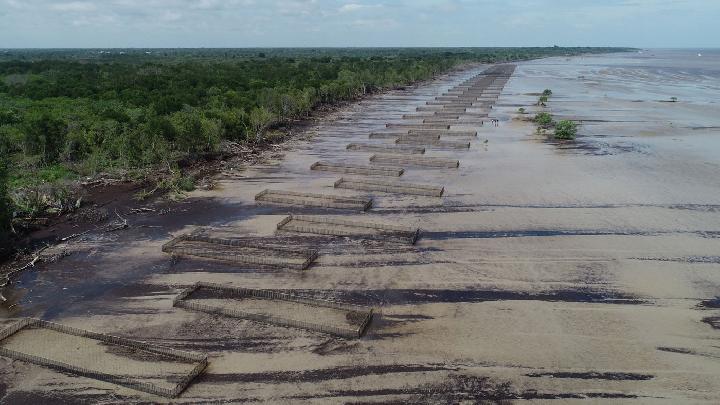
ASEAN-UK Green Transition Fund (GTF) visited the mangrove area in Bengkalis Island, Riau, Indonesia.








 English (US) ·
  Indonesian (ID) ·