
 1 jam yang lalu
TEMPO.CO, Jakarta - A number of images are circulating on Instagram [archive], Facebook, TikTok, X, and YouTube claiming flooding in the Iranian desert after the country destroyed 12 US defense radar stations in the Gulf region.
The locations in question include the United Arab Emirates, Jordan, and Qatar. The images show dams overflowing and inundating land. Netizens are linking the damage to various US radars to sudden weather changes affecting the Iranian desert landscape.
The following is the narrative:
Iranian deserts turned into rivers after Iran destroyed 12 US radar systems in the Gulf region
However, is it true that the flooding in Iran’s deserts is related to the destruction of US military radars?
FACT CHECK
Tempo verified this content through reverse image searches and credible information sources. The facts show that the circulating narrative is based on a false context. River water levels did rise, but not to the point of flooding the desert as claimed. This phenomenon was triggered by the arrival of spring and is unrelated to the destruction of US radar systems in the Gulf region.
Image Verification
Image 1
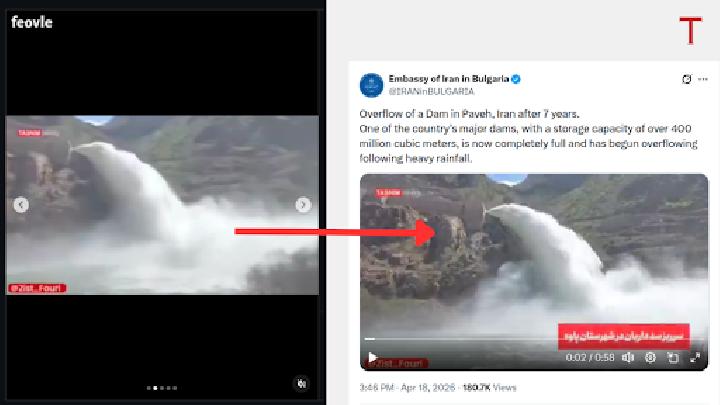
The first image shows water rushing through a dam canal. The video comes from a report by the Iranian news agency Tasnim, which was reposted by the Iranian Embassy in Bulgaria’s X account on April 1, 2026.
The embassy stated that the information pertains to the overflow of the Paveh Dam or Daryan (Darian) Dam on the Sirvan River in Iran’s Kermanshah Province. Water overflowed from the dam after heavy rains hit the region.
The embassy did not link the water overflow following the seven-year drought to the destruction of dozens of US radar systems during the war.
Image 2
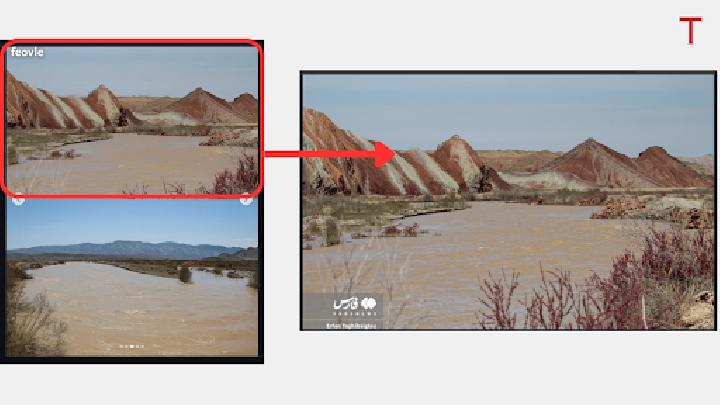
The second image shows a collage of two photos. The Iranian news agency Fars uploaded the top photo in late April 2026. The scene shows the Qezel Ouzan or Ghezel Ozan River in northern Iran, which is once again flowing with water.
“Winter and spring rains have revived the Qezel Ouzan River, a vital agricultural artery flowing through several Iranian provinces, after years of declining water levels,” reads an excerpt from Fars’s caption on the phenomenon.
This media outlet, which frequently reports on the Iranian Revolutionary Guard Corps (IRGC), did not link the rise in river flow to the damage to US radar systems caused by Iranian military strikes.
The photo below is from Isna Photo, uploaded on April 22, 2026. This Iranian state-controlled media outlet also showed the Qezel Ouzan River flowing with abundant water due to spring rains.
“The continuous rainfall this spring has caused this perennial river to become fuller (water flow increased) than before. To such an extent that all the rice paddies and farmlands along the riverbanks have been abundantly irrigated by the waters of the Qezel Ouzan,” reads part of the caption for the post.
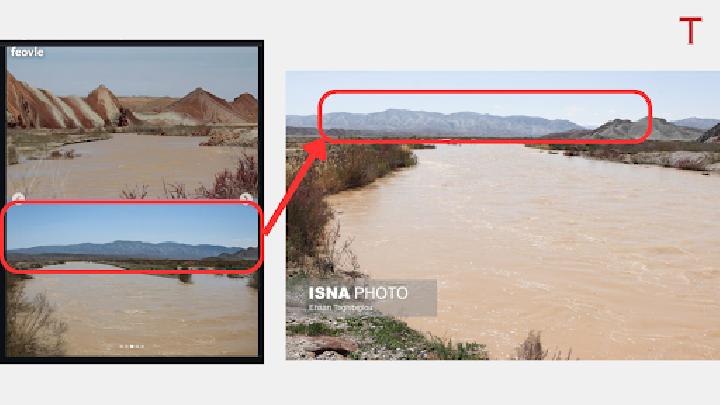
The photo below, taken by Isna Photo and uploaded on April 22, 2026, shows the Qezel Ouzan River swollen with water from the spring rains.
Image 3
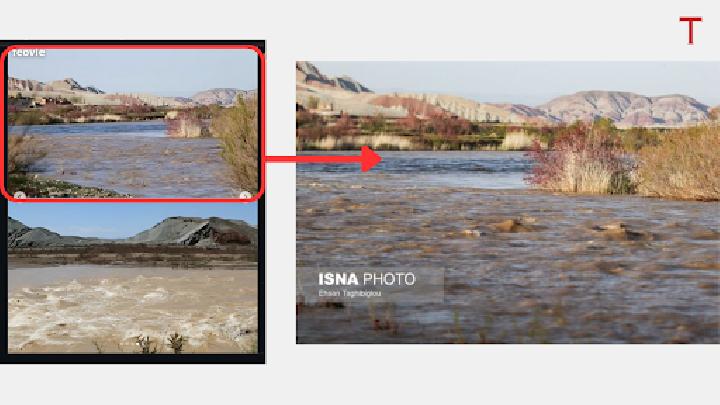
The photo above was uploaded by Isna Photo.
The top section of the next photo collage also features a photo posted by Isna Photo. The official statement does not link the spring downpours to damage to U.S. radar technology.
The bottom photo, which matches the content of the Fars article, is similar. The photo caption merely notes that the increased water flow benefits farmers whose rice fields stretch along the riverbanks.
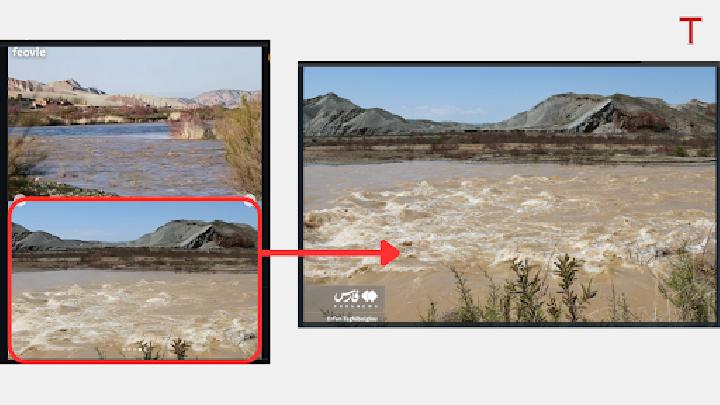
A comparison of the photo at the bottom, which matches the content of the Fars article.
Drought in Iran
The Encyclopædia Iranica reports that the Qezel Ouzan River turns red and overflows in early spring and summer due to snowmelt from the Persian Highlands. Its flow then decreases and its color turns gray or milky blue in the fall.
Research indicates that the river’s annual flow exceeds 2.1 million cubic meters. The highest water volume occurs from April to May, while the lowest point is from August to September.
Extremely low rainfall since 2020 has affected the river’s flow. Research by World Weather Attribution shows that countries in the Fertile Crescent region, particularly around the Euphrates and Tigris rivers, are experiencing similar conditions.
The water crisis will peak in 2025, marked by dams no longer receiving water supplies. Long-term data indicates that the crisis is caused by increased evaporation rates, water-intensive agricultural practices, and unsustainable groundwater extraction.
The Iranian government adopted the National Climate Change Management Plan in October 2025 as an effort to strengthen the water and agriculture sectors. The Food and Agriculture Organization (FAO) has also established regional cooperation to enhance water management capacity in the region.
According to Tempo, Iranian authorities have accused the United States and the United Arab Emirates of stealing clouds from their territory. However, researchers at the Center for Strategic and International Studies refuted these allegations in an article published on May 23, 2023. Iran is suspected of making these accusations to cover up its own failures in natural resource management.
DW reported that an Iranian military general once claimed Israel was stealing their clouds. The statement was eventually retracted after the Iranian Meteorological Organization refuted it.
CONCLUSION
Tempo’s verification concluded that the narrative of Iranian desert flooding following the destruction of 12 US radars in the Gulf region is misleading.
TEMPO FACT-CHECK TEAM
**Do you have information or claims that you want to have fact-checked? Contact our ChatBot. You can also send criticism, objections, or feedback for this Fact-Checking article via email to [email protected].








 English (US) ·
  Indonesian (ID) ·