
 57 menit yang lalu

TEMPO.CO, Jakarta - Japanese Finance Minister Satsuki Katayama said Japan and the United States agreed to strengthen coordination on currency market movements following Tokyo's intervention to curb the yen's weakening against the US dollar.
"We are in good coordination regarding recent currency movements amid the Middle East conflict," Katayama told reporters after meeting with US Treasury Secretary Scott Bessent in Tokyo on Tuesday, as reported by Kyodo and quoted from Antara.
Bessent also wrote on the platform X that communication and coordination between the two countries in addressing excessive volatility in the currency market remains intensive and strong.
The US Treasury Secretary is in Tokyo ahead of a two-day meeting between US President Donald Trump and Chinese President Xi Jinping in Beijing starting Thursday.
Instability in the Middle East has boosted the US dollar as a safe haven asset, prompting Japanese authorities to intervene on April 30 to stem the yen's weakening to levels above 160 per dollar, government sources said.
Katayama said Japan and the US agreed to coordinate based on a joint statement last September, which emphasized that market interventions should only be used to address volatility and disorderly currency weakening or strengthening.
A weaker yen benefits Japanese exporters by increasing the value of repatriated overseas profits. However, excessive depreciation is also feared to burden households and companies due to rising energy and raw material import costs.
In addition to currency issues, Katayama said he and Bessent discussed strengthening critical mineral supply chains ahead of the G7 finance ministers' meeting in Paris next week.
Regarding China's restrictions on critical mineral exports, Katayama called Beijing's measures against Japan "terrible and unfair," and said the US would continue to convey its objections to China.
Japan-China relations have deteriorated following diplomatic tensions over Taiwan, while Beijing has tightened restrictions on the export of dual-use goods that can be used for both civilian and military purposes, including potentially rare earth metals.
Katayama also discussed with Bessent the threat of advanced artificial intelligence technology, including the Claude Mythos model from the US company Anthropic, which is said to be able to identify vulnerabilities in technological infrastructure and financial systems.
"Frankly speaking, China can catch up in (developing) such (models) in a matter of six months or a year...the Western side needs to coordinate so that it will not be weaponized by those who are not our allies," Katayama said.
Read: Japan to Halt Weapons Component Exports if Used for Aggression
Click here to get the latest news updates from Tempo on Google News
Japan's Stocks Surge After Sanae Takaichi Wins Party Vote
6 Oktober 2025
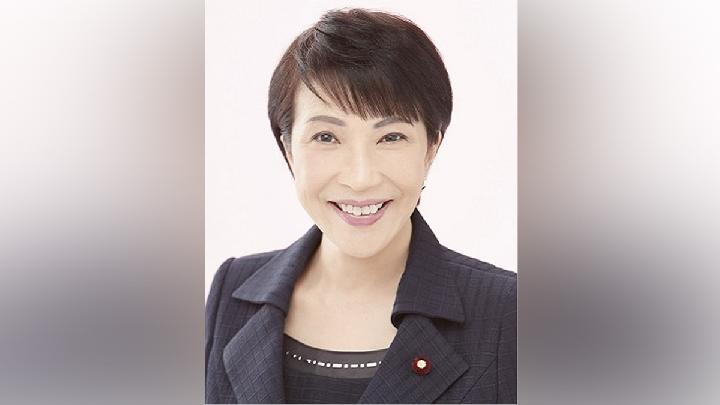
The Nikkei 225 Index was up 4.6% while the yen slumped. Sanae Takaichi is considered to have an expansionary fiscal agenda for Japan.
Bank of Japan Raises Interest Rates to Highest in 17 Years, Yen Jumps
24 Januari 2025

The Bank of Japan raised interest rates on Friday to their highest since the 2008 global financial crisis and revised up its inflation forecasts.
Japan Sees Record Highs in Foreign Visitors Amid Weakening Yen
22 Juli 2024

Japan is experiencing a surge in international tourism, driven by the weakened yen against foreign currencies.







 English (US) ·
  Indonesian (ID) ·