
 1 jam yang lalu
TEMPO.CO, Jakarta - Indonesia’s benchmark Jakarta Composite Index (JCI) opened lower at 6,628.59 on Monday, May 18, 2026, compared to last week’s close of 6,723.32. The index later plunged as much as 4.28 percent to 6,435 by 10:00 AM local time.
Imam Gunadi, equity analyst at PT Indo Premier Sekuritas (IPOT), said market attention this week remains focused on the implementation of MSCI’s index and weighting rebalancing.
“Volatility is expected to remain high, particularly during the closing auction session, which is typically the main period for global passive funds to adjust their portfolios,” Imam said in a press statement on Monday.
Despite the sharp decline, Imam predicted there could be a rotation of inflows into stocks expected to gain a higher weighting in the MSCI index, including BMRI, PGAS, ADRO, INDF, MTEL, and TOWR.
He also noted that investors are beginning to anticipate the potential reclassification of South Korea from an emerging market to a developed market. In the medium term, he said, the move could encourage portfolio reallocation toward other emerging markets, including Indonesia.
MSCI Rebalancing and Market Volatility
Technically, Imam said the JCI is currently in a bearish phase, with support levels projected in the 6,640 to 6,538 range. According to IPOT, current market pressure reflects technical factors and global portfolio rebalancing rather than structural deterioration in Indonesia’s domestic economy.
Imam added that Indonesia’s economy still maintains relatively solid fundamentals, citing first-quarter 2026 economic growth of 5.61 percent.
“However, until foreign capital flows stabilize following the MSCI adjustment, market volatility is expected to remain elevated and require investors to exercise greater discipline in managing risks and trading positions,” he said.
Rupiah Weakens Amid Global Risk-Off Sentiment
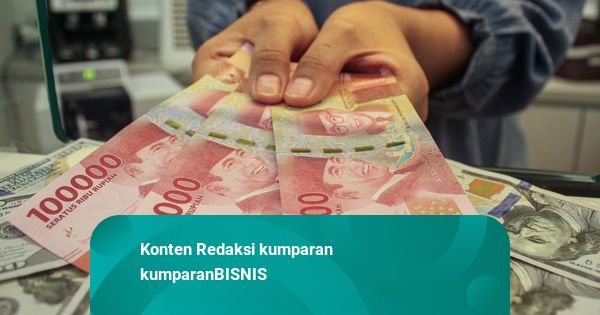
Alongside the stock market sell-off, the rupiah also weakened sharply on Monday. The Indonesian currency fell 33 points, or 0.19 percent, to Rp17,630 per US dollar from the previous close of Rp17,597. At the time of reporting, the rupiah had weakened further to Rp17,672 per US dollar.
Lukman Leong, currency analyst at Doo Financial Futures, said the rupiah’s decline was linked to market disappointment following a meeting between U.S. President Donald Trump and Chinese President Xi Jinping, which he said failed to produce significant progress regarding the ongoing U.S.-Iran conflict.
According to Lukman, the rupiah could weaken further amid growing global “risk-off” sentiment, which strengthened the US dollar while triggering broad sell-offs across assets including bonds, equities, cryptocurrencies, and emerging-market currencies.
“Investors were disappointed because the Xi-Trump meeting did not produce many solutions regarding the US-Iran conflict,” Lukman said, as quoted by Antara.
Oil Prices and Prabowo’s Remarks Add Pressure
Ahead of the meeting, China had called for the reopening of the Strait of Hormuz while maintaining a ceasefire in the Middle East conflict. Chinese Foreign Minister Wang Yi said Beijing continues to support peace efforts and negotiations aimed at ending the conflict.
Meanwhile, Iranian Foreign Minister Abbas Araghchi said mediation efforts led by Pakistan and the United States had not failed but still faced significant obstacles due to distrust toward Washington and conflicting US messages.
Lukman added that markets are also awaiting a decision from Trump on whether the United States will continue attacks against Iran. Negotiations aimed at ending the conflict and resolving concerns over Iran’s nuclear program have so far failed to reach an agreement.
The uncertainty has pushed global crude oil prices higher again. Although China and the United States agreed on several areas of cooperation, Lukman said market concerns over elevated oil prices overshadowed those developments.
“Both countries and the global market want the war to end, but it appears difficult for Iran to abandon its nuclear ambitions,” Lukman said.
Separately, money market analyst Ibrahim Assuaibi said the rupiah was also pressured by market reaction to remarks by Indonesian President Prabowo Subianto, who recently stated that the strengthening US dollar does not significantly affect rural communities.
According to Ibrahim, the statement may have triggered negative sentiment among investors and market participants.
Read: Rupiah Weakens After Xi Jinping-Trump Talks Fail to Ease Iran Tensions
Click here to get the latest news updates from Tempo on Google News







 English (US) ·
  Indonesian (ID) ·