
 1 jam yang lalu
April 21, 2026 | 10:22 pm

TEMPO.CO, Jakarta - NASA's Curiosity Mars rover has identified seven organic compounds in rock near the planet's equator, five of which had not previously been found on Mars.
Researchers publishing in the journal Nature Communications on Tuesday said the experiment also hinted at the presence of another organic compound bearing a structure similar to the precursors to DNA, the molecule that carries genetic information in living organisms on our planet.
However, the scientists also noted that the organic compounds — molecules primarily composed of carbon atoms bonded to other elements that form the structural basis of all life on Earth — could have formed through nonbiological processes.
Further evidence that Mars may have been a habitable planet billions of years ago
Like the Earth and other planets in the solar system, Mars is thought to have formed around 4.5 billion years ago. Early in its history, it was warmer and wetter than the cold, dry place it is today.
Both of NASA's Mars rovers, Curiosity and Perseverance, have identified organic materials on the planet.
The Curiosity rover had been exploring the vast Gale Crater, thought both to be caused by an impact from a meterorite and to be a now-dry lake. The abundance of clay present in the Glen Torridon area of the crater suggests water was once present there. The meteorite could have brought organic matter to the planet and the water could have provided suitable conditions for it to develop.
"We cannot yet say that Mars ever harbored life, but our findings further support the evidence that Mars was a habitable world around the time that life of Earth originated," said Amy Williams, an astrobiologist and planetary scientist at the University of Florida, member of the Curiosity scientific team, and lead author of the study.
"To be clear, we have not found evidence for life with this study, but we're further refining the building-block molecules that were present on Mars," Williams said.
Building blocks of life preserved in rocks for billions of years
Researchers estimated that the rock samples analyzed dated to at least 3.5 billion years ago. Curiosity, which landed on Mars in 2012, took the samples in question in 2020.
One molecule identified, benzothiophene, has also been found in meteorites and asteroids.
"The same stuff that rained down on Mars from meteorites is what rained down on Earth, and it probably provided the building blocks for life as we know it," Williams said. "We're seeing the building blocks for life — prebiotic chemistry on Mars — preserved in these rocks for billions of years."
Clay can preserve such organic molecules better than other minerals, explaining why the site was chosen as a search point. The Curiosity rover was dispatched carrying a chemical called TMAH, which can break apart organic matter to see what it's made up of. Such a test had not been conducted off Earth before.
Williams said that another molecule identified containing nitrogen "is a precursor to how DNA is eventually built."
Williams said it was ultimately not possible to tell if the organic matter came from "geologic processes, infall from meteorites, or life," but said the findings did suggest that "if complex organic matter from life were preserved on Mars, we should be able to detect it with current and upcoming rover instruments."
Read: Lyrid Meteor Shower Coming to Australia Next Week: When and How to See It
Click here to get the latest news updates from Tempo on Google News
Lyrid Meteor Shower Coming to Australia Next Week: When and How to See It
6 hari lalu

Set your sights on the sky for a dazzling display as the Lyrid meteor shower illuminates Australian skies on the night of April 22-23.
NASA's Billion-Dollar Space Race Goes Into Overdrive
9 hari lalu

NASA's renewed push to get a human mission to the moon and Mars is neither cheap, nor for the faint of heart. But who ends up covering the costs?
NASA: Artemis Astronauts 'Healthy and Happy' After Returning to Earth
10 hari lalu
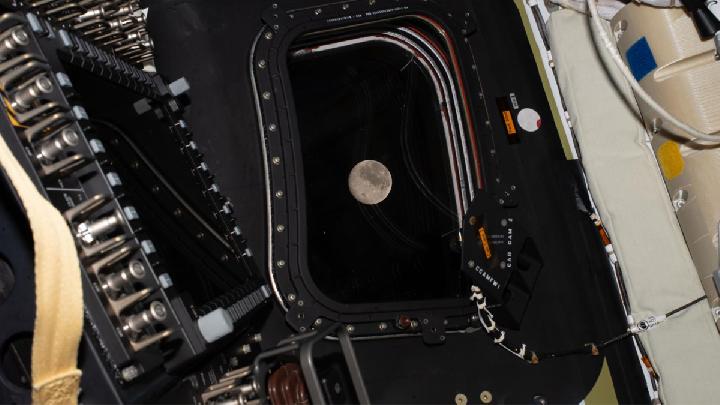
NASA officials celebrated the success of the Artemis II mission on Friday, April 11.
Artemis II Crew Returns to Earth, Splashes Down in Pacific
10 hari lalu
The four crew members of Artemis II are back on Earth after splashing down in the Pacific Ocean off the California coast.
Meet the 12 Astronauts Who Walked on the Moon
11 hari lalu

Discover the stories of the 12 astronauts who walked on the Moon, from Neil Armstrong's first steps to the final mission of Apollo 17.
Artemis II Crew Emotional as Mission Prepares for Reentry
12 hari lalu
Orion is set to splash down in the Pacific in less than 48 hours, with crew members saying the mission changed how they see the world.
Inside NASA Approval of iPhone 17 Pro Max for Artemis II
14 hari lalu
NASA approves iPhone 17 Pro Max for the Artemis II moon mission. Discover the rigorous safety process required to send the device into lunar orbit.
Artemis II Breaks Record for Farthest Human Spaceflight
14 hari lalu
The astronauts on the Artemis II mission made history on Monday, reaching the farthest distance in space of any human.
Artemis II: Orion Crew Set to Break Deep Space Record
15 hari lalu
NASA's Artemis II mission is set to break the record for the farthest human travel from Earth during its historic lunar flyby on April 6-7, 2026.
Artemis II Passes Halfway Point to Moon, Sends Earth Photos
17 hari lalu
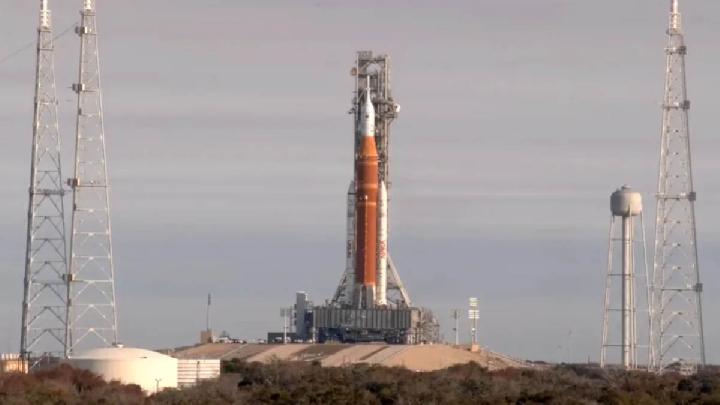
Artemis II is now closer to the Moon than the Earth. The astronauts on board have sent back eye-catching photos of our planet.








 English (US) ·
  Indonesian (ID) ·