
 1 jam yang lalu
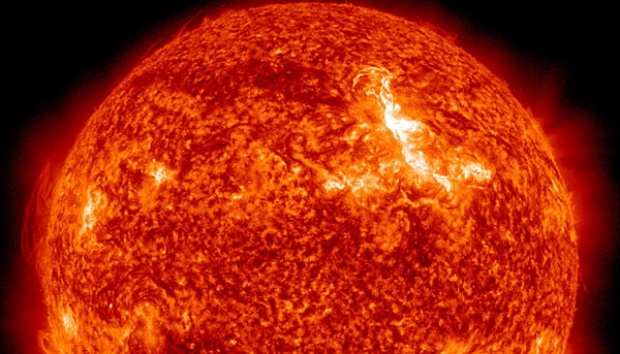
TEMPO.CO, Jakarta - A powerful solar flare that erupted from the Sun on May 10 has triggered radio communication disruptions across the Atlantic and could produce Northern Lights displays visible across parts of the United Kingdom (UK) and northern United States (US) later this week.
Rolling Out reported that the solar flare was classified as an M5.7 eruption, a moderate-to-strong level on the solar activity scale. The flare originated from sunspot region AR4436 at 9:39 a.m. EDT and was accompanied by a coronal mass ejection (CME), a massive release of plasma and magnetic fields from the Sun’s corona.
The eruption caused temporary high-frequency radio blackouts over the Atlantic Ocean after ionizing Earth’s upper atmosphere, disrupting signals used by aircraft, maritime operators, and amateur radio users.
The US National Oceanic and Atmospheric Administration (NOAA) and the UK Met Office are now monitoring the CME as it continues moving through space.
As cited by Yorkshire Live, the CME erupted around 1:13 p.m. on Sunday and is currently rotating into a more Earth-facing position along the Sun’s northeastern edge. Scientists believe part of the expanding cloud of solar material could graze Earth around May 13.
Forecasters said the impact is expected to trigger minor G1-level geomagnetic storm conditions, the lowest category on the geomagnetic storm scale. While relatively weak, the storm may still intensify aurora borealis activity and improve the chances of Northern Lights sightings across Scotland, northern England, and parts of the northern United States.
The Met Office (UK's national meteorological service) noted that 2026 marks a peak year for solar activity, increasing the likelihood of visible auroras in lower-latitude regions.
Northern Lights displays are generated when charged particles from the Sun collide with oxygen and nitrogen atoms in Earth’s upper atmosphere, producing glowing waves of green, purple, and red light.
The latest solar activity comes nearly two years after the major geomagnetic superstorm of May 2024, which produced auroras visible across large parts of the continental United States and was classified as a G5-level storm, the strongest category.
Although the current CME is expected to be significantly weaker, scientists are continuing to monitor AR4436 and nearby sunspot region AR4432, both of which remain active.
Rolling Out reported that forecasters have not ruled out additional M-class solar flares or even a possible X-class eruption, the most powerful category of solar flare activity, in the coming days.
As AR4436 rotates into a more direct alignment with Earth, any future eruptions from the region could potentially have a greater impact on communications systems and geomagnetic conditions worldwide.
Read: Solar Activity Surges, Raising Chance of Northern Lights in US This Week
Click here to get the latest news updates from Tempo on Google News
Solar Activity Surges, Raising Chance of Northern Lights in U.S. This Week
5 Februari 2026

A series of powerful solar flares unleashed by the sun could possibly bring the northern lights into view on Thursday, February 5.
NASA Captures Sun's Solar Flares, Auroras May Light Up Skies
4 Februari 2026

NASA captured powerful solar flares from Sun's active Region 4366, raising the possibility of auroras and brief radio disruptions on Earth.








 English (US) ·
  Indonesian (ID) ·