
 5 jam yang lalu
TEMPO.CO, Jakarta - China is undergoing a renewable energy revolution. In 2025 alone, it added nearly 450 gigawatts (GW) of clean energy capacity, which was more solar and twice as much wind as the rest of the world combined.
Before 2010, China had only limited renewable energy. Today, electricity generated by huge wind and solar farms that stretch out across mountains, deserts, on rooftops and off the coast, account for a quarter of electricity production.
The country achieved the goal of adding 1,200 GW of wind and solar capacity to the grid by 2030 five years ahead of schedule. China also produces over 80% of the world's photovoltaic panels, helping drive down costs and accelerating the clean energy transition globally.
Its quest to rid itself of dependence on foreign oil and gas has been the chief inspiration for the rapid expansion of domestic energy sources and electrification, says Tim Buckley, director of Australian think tank Climate Energy Finance.
Beijing invested early in electric vehicles, and batteries, noted Buckley. Fossil fuel-free vehicles now account for more than half of all car sales in China, compared with about 19% in the European Union.
But the clean energy boom has not displaced coal, the most polluting fossil fuel. The country remains the world's largest emitter of carbon dioxide and continues to exploit its own vast coal reserves in pursuit of energy self-reliance. China consumes over 50% of global supply, in part because it's the only fossil fuel it doesn't have to import.
In January and February 2026 alone, China added 20 gigawatts of coal-fired power capacity — nearly half the amount of new renewables added over the same period. This partly explains why the country is not on track to meet its 2060 carbon neutrality goal, according to climate think tank, Carbon Tracker.
The contradiction is at the center of scrutiny over China's latest five year-plan (5YP), a policy blueprint that will shape the economy through 2031 and determine whether the country can meet its climate pledges and help curb planetary heating.
The new 5YP: A coal and renewables balancing act
In 2015, China signed onto the Paris climate agreement, which aims to limit global temperature rise to well below 2 degrees Celsius (3.6 Fahrenheit) or preferably 1.5C, compared to pre-industrial levels. The country then committed to peak CO2 emissions before 2030, and to achieve carbon neutrality by 2060.
For Beijing to achieve those goals, Climate Action Tracker says China needs "clear targets for coal consumption reduction" in its new 5YP. However, the economic roadmap released in March was not "explicit about how fossil fuels will be constrained," said China analyst Qi Qin of the Finland-based Center for Research on Energy and Clean Air.
Though Chinese President Xi Jinping promised in 2021 to detail a reduction in coal energy use in the 2026-31 plan, it contains "no clear phase-down plan, no clear fossil fuel cap," said Qin. "The language is much more conservative than many people expected," she told DW. One reason is the continued influence of the powerful coal lobby on Chinese government policy.
The 5YP calls for China to become an "energy powerhouse," but does not specify the scale of future renewable expansion. At the same time, a 2025 government statement on China's "new energy system" said clean energy, including batteries, is expected to provide primary baseload power in the future, with retrofitted coal plants serving as a flexible back-up.
Despite concerns that China is not yet on track to meet its Paris climate targets, there are signs its emissions growth may be slowing. The country's CO2 emissions fell slightly (0.3%) in 2025, continuing a flat or downward trend since 2024. Clean power sources put China's emissions into reverse "for the first time," according to an analysis commissioned by climate website, Carbon Brief.
Emission declines were recorded across all major sectors, including transport (3%), while coal power generation also dipped slightly as solar power output expanded by 43% between 2024 and 2025.
Low-carbon electricity sources, renewables and nuclear energy have kept up with additional demand for electricity in the country and that will likely continue through 2030, stated the International Energy Agency.
Analysts such as Tim Buckley now believe coal power and emissions may already have peaked and plateaued, although others are more cautious. He says China has traditionally been conservative in its climate commitments, while pursuing a stable "long-term strategy" built around unprecedented clean energy expansion.
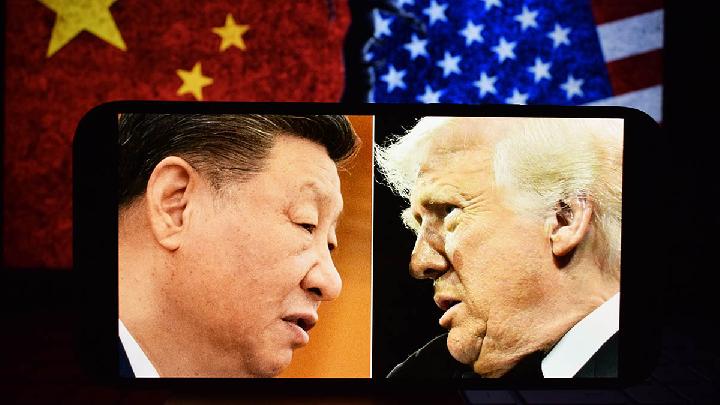
"There is a potential for China to accelerate its ambition," Buckley said, even if the government is not explicit about its goals and has been reluctant to become the global leader on climate mitigation — despite the US abrogating its climate role under Donald Trump's fossil-fuel focused US presidency.
Renewed commitment to get off fossil fuels
New Chinese government guidelines on fossil fuels released on April 22 support the view that the country is willing to move away from finite fossil fuels, strengthen energy independence and still achieve its climate targets, says Qin.
"The new central guideline talks about strictly controlling fossil fuel consumption, reducing coal and controlling oil. It still leaves room for flexibility, but these are concrete policy levers," Qin said of the document, which also indicated a desire to increase clean energy consumption.
While coal has underpinned decades of rapid expansion, China this year set its lowest economic growth target since 1991. Qin says this reflects a recognition that climate targets will be difficult to meet without a relative economic slowdown because emissions remain closely linked to growth.
The April "guiding opinions," which are not binding, also outline how more clean energy can be absorbed into the system as China upgrades its grid to better transmit renewable electricity.
Qin says there was a rush to commission 161 GW of new coal-fired power plants before the guideline was released because of a growing realization that coal power utilization "will definitely go down in the future." China's coal-fired power plants are running at lower capacity, and some are losing money, raising the risk of stranded assets as the energy transition gathers pace.
While China's decarbonization trajectory is increasingly being shaped by economic and energy security imperatives, rather than climate goals alone, analysts say the outcome could be the same. Renewable energy expansion is now a core component of China's economic model, the industry having contributed a third of GDP growth in 2025, noted Qin.
China's focus on selling solar panels, wind turbines and electric vehicle batteries to the world has increasingly shifted toward deploying clean technology domestically, wrote Li Shuo, the director of the China Climate Hub at the Asia Society Policy Institute, a policy think tank, in an online post.
"China's clean-technology development — rather than traditional administrative climate controls — is increasingly becoming the primary driver of emissions reductions," Shuo wrote.
Read: Indians Growing Anxious as Modi Asks Them to Cut on Fuel
Click here to get the latest news updates from Tempo on Google News







 English (US) ·
  Indonesian (ID) ·