
 2 jam yang lalu
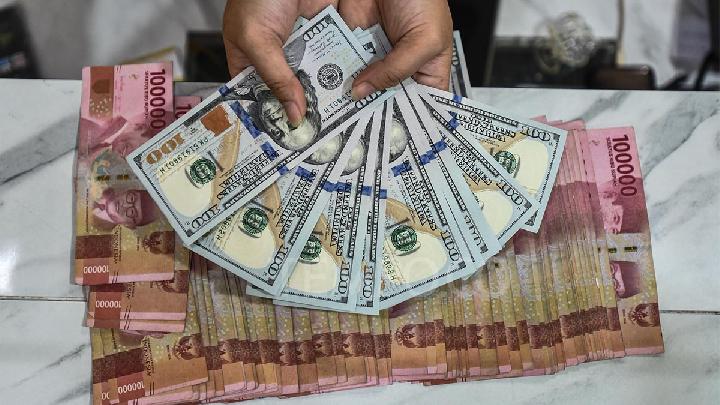
Intervention by Bank Indonesia fails to stop the weakening of the rupiah’s exchange rate. Fiscal discipline is the key.
TRUST is the capital and the mantra of many in the financial market. When confidence declines, investors rush to withdraw their funds and invest them in safer instruments. This capital outflow triggers a weakening of the exchange rate against foreign currencies.
This is exactly what has been happening to the rupiah as of late. When the market closed on Friday afternoon, May 8, 2026, the rupiah’s exchange rate had weakened 49 points, or 0.28 percent, against the United States dollar, reaching Rp17,382 compared to the previous day’s close. At the start of last week, the rupiah had reached 17,414 per US dollar—an all-time low.
In addition to tightening dollar purchases to maintain rupiah stability, Bank Indonesia (BI) increased the yield on Bank Indonesia Rupiah Securities (SRBI) several times from January to April 2026, reaching nearly 6 percent. SRBI auctions increased to twice a week. However, this monetary instrument has not been able to win back foreign capital.
Short-term interventions are not a panacea for restoring confidence. Bloomberg data indicates that capital outflows from the Indonesian stock and bond markets from January to the end of April 2026 reached Rp68.4 trillion (US$3.95 billion), four times the previous year’s figure. The majority of the outflows came from the stock market, particularly after the Morgan Stanley Capital Index gave a warning about the transparency of the Indonesian capital market.
Poor fiscal governance is the root cause of declining investor confidence. In pursuit of economic growth, the government has been going all out to speed up expenditures for the Free Nutritious Meal (MBG) program and the Red-and-White Village Cooperatives. In the first quarter, MBG expenditures surpassed Rp55 trillion (about US$3.2 billion) with a budget ceiling of Rp335 trillion (US$19.4 billion). On paper, this substantial spending did indeed drive growth of up to 5.61 percent.
The problem is, growth supported by government spending, especially by relying on seasonal factors such as the Idul Fitri holiday, cannot be repeated every quarter. Market participants view this significant economic growth as resting on fragile and unsustainable foundations.
As proof, the State Budget deficit in the first quarter reached Rp240.1 trillion (about US$13.9 billion), up from Rp99.8 trillion (US$5.8 billion) in the same period last year. This figure is equivalent to 0.93 percent of the gross domestic product. Aggressive but unproductive fiscal expansion is one of the reasons investors are hesitant to keep their money in Indonesia’s financial markets.
Then there is the government’s ability to repay this year’s debt payment, which comes to Rp833.96 trillion (US$48.2 billion). By engaging in such substantial spending, debt interest payments have made state finances increasingly vulnerable. Market participants have read the situation and are now demanding higher bond yields. Those who lose confidence quickly withdraw funds, putting downward pressure on the rupiah’s exchange rate.
The weakening rupiah has created a vicious cycle. Energy subsidies and compensation costs are increasingly high amid the Middle East conflict. Rising oil prices are in turn raising import costs. The surge in subsidies risks increasing the deficit, making Indonesia’s fiscal situation even more precarious.
The government is trying to reassure the public that economic fundamentals remain strong. One way they are doing this is by pointing to the trade balance, which recorded a US$3.32 billion surplus in March 2026. The problem is, this surplus occurred not because of a surge in exports, but rather because of a decline in imports, which contracted 8.08 percent in March over the previous month.
This was triggered by, among other things, sluggish domestic demand. Manufacturing Purchasing Managers’ Index (PMI) figures have fallen over the past two months due to weakening production and reduced demand for imported goods. This has ultimately led to mass layoffs in several industries.
Efforts to restore market confidence must go beyond foreign exchange intervention and exchange controls, such as those implemented by the central bank, or the requirement to deposit export proceeds in state banks, or the optimistic statements made by Prabowo Subianto’s cabinet ministers. Trust is an intangible foundation of the economy that is influenced by perception.
The key is fiscal discipline. This involves improving spending quality by curbing unproductive expenditures to prevent the deficit from growing. Regulations should be implemented to make it easier for exporters to bring in dollars. As long as fiscal and monetary policies only alleviate the symptoms, investors will increasingly turn away from Indonesia.
Read the Complete Story in Tempo English Magazine
Expert Shares Why Rupiah Falls Below Rp17,500 per US Dollar Today
3 jam lalu
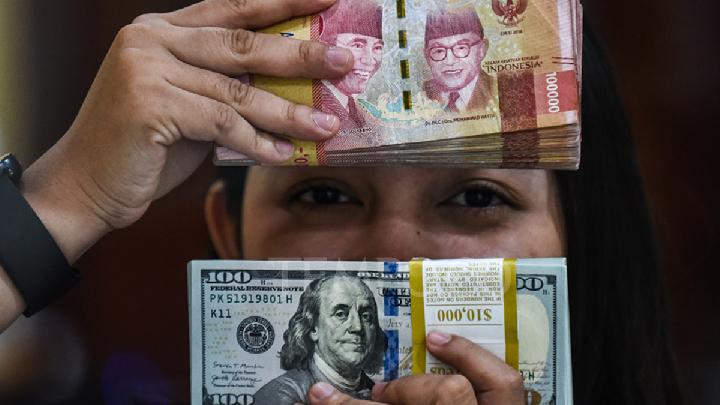
The economic growth in the first quarter of 2026, which reached 5.61 percent, did not immediately strengthen the exchange rate of rupiah.
Bank Indonesia May Lift Benchmark Rate to 5% as Rupiah Weakens
3 jam lalu

Bank Indonesia is predicted to raise the benchmark interest rate in May or June 2026 if the rupiah continues to weaken.
Rupiah Weakens as Hopes for US-Iran Peace Deal Fade
5 jam lalu

Indonesia's rupiah exchange rate weakened by 69 points, or 0.40 percent, to Rp17,483 per US dollar on Tuesday morning.
Today's Market: Rupiah Weakens to Rp17,414, JCI Drops 0.92%
17 jam lalu

The exchange rate of the rupiah and the Composite Stock Price Index (IHSG) weakened in today's trading, Monday, May 11, 2026. The rupiah closed weaker by 32 points at Rp 17,414 per US dollar. Meanwhile, IHSG closed down by 0.92 percent at 6,905.6 level.
Rupiah Rescue Scramble
1 hari lalu
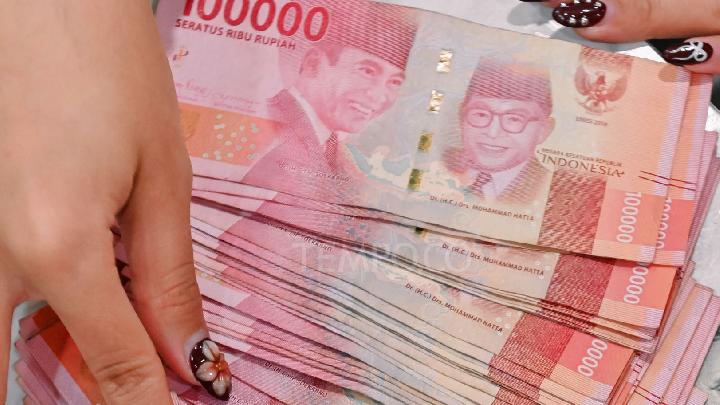
Bank Indonesia is deploying multiple measures to stem the rupiah's declines. Pressure is mounting as foreign funds are fleeing.
The Ostrich Policy Strangling the Rupiah
2 hari lalu
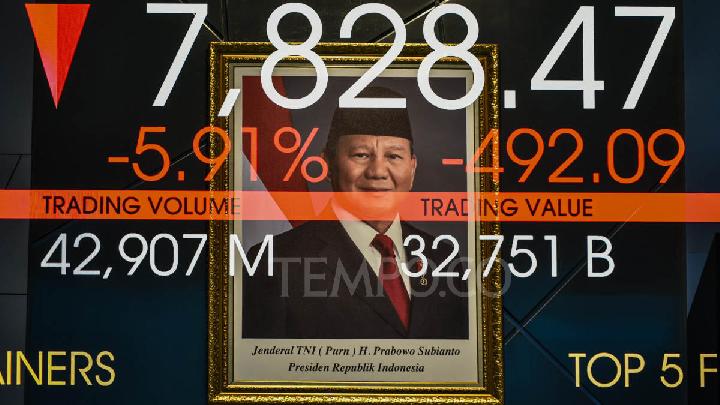
The rupiah keeps breaking historical low records. Denial in Jakarta is making things worse.
Bank Indonesia: FX Reserves Sufficient to Maintain Rupiah Strength
4 hari lalu
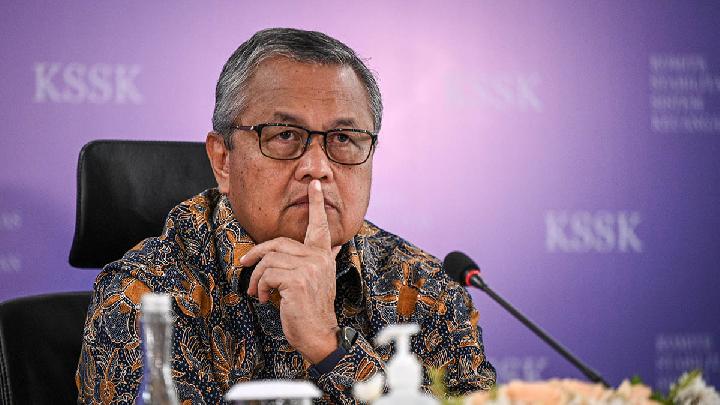
Bank Indonesia Governor Perry Warjiyo said that the country's foreign exchange reserves are sufficient for large-scale interventions.
Today's Top 3 News: 7 BI's Rupiah-Strengthening Strategies, Floods Hit Jakarta
4 hari lalu
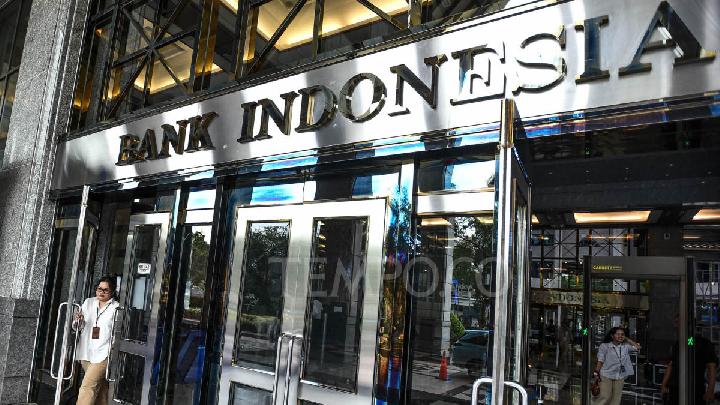
Here is the list of the top 3 news on Tempo English today.
Will 'Currency Swap' Deal Help Stabilize Rupiah?
5 hari lalu
Amidst global pressure, a currency swap deal with other countries could help stabilize the exchange rate of the Indonesian rupiah, Indef said.
Today's Top 3 News: 7 BI Rupiah-Strengthening Strategies Approved by Prabowo
5 hari lalu
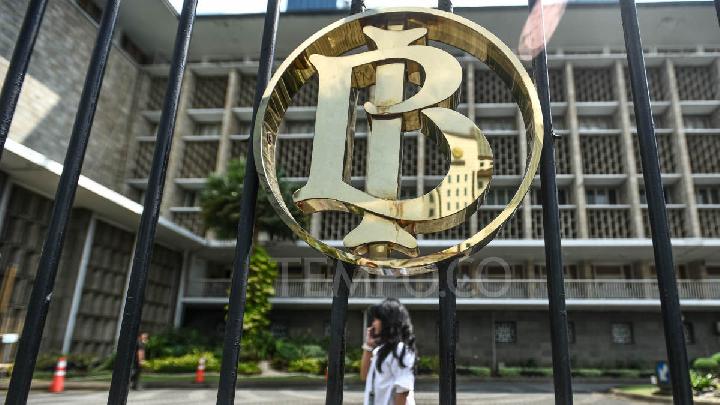
Here is the list of the top 3 news on Tempo English today.






 English (US) ·
  Indonesian (ID) ·